Spanish (page 3)
Beginners’ Spanish I (SPAN 201): Attending an Event
Student, Fall 2023
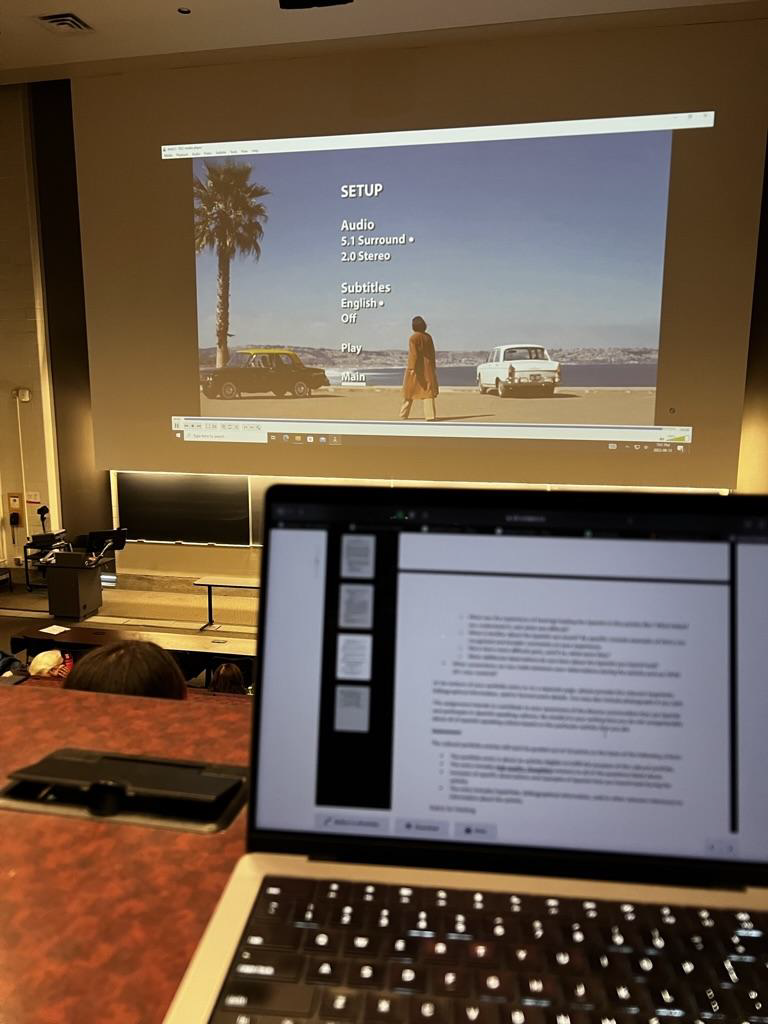
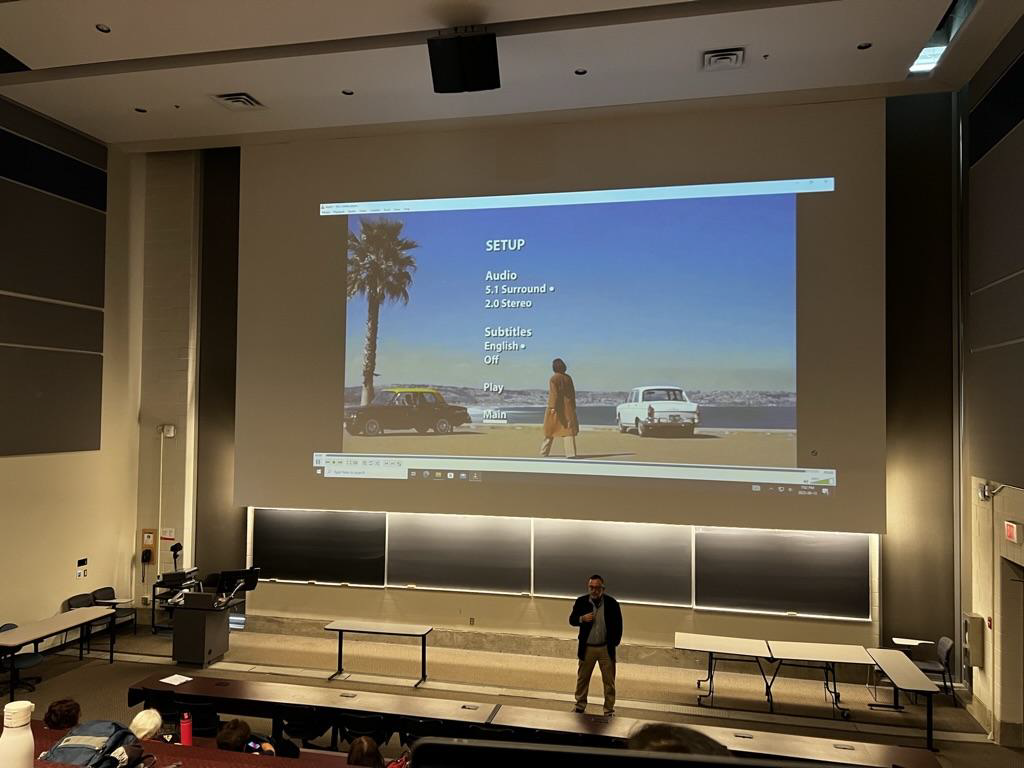
“On September 13, I participated in the event[1] presented by the Political Science and School of Culture departments. In commemoration of the 50th anniversary of the military coup in Chile, they presented three movies with discussion after each one of them. When I arrived I felt right away very welcome by all the people in the room, most part of them greeted me with “¡buenas noches!”, and also asked me “¿cómo estás?”, showing what la profesora told us that people always greet each other when they meet.
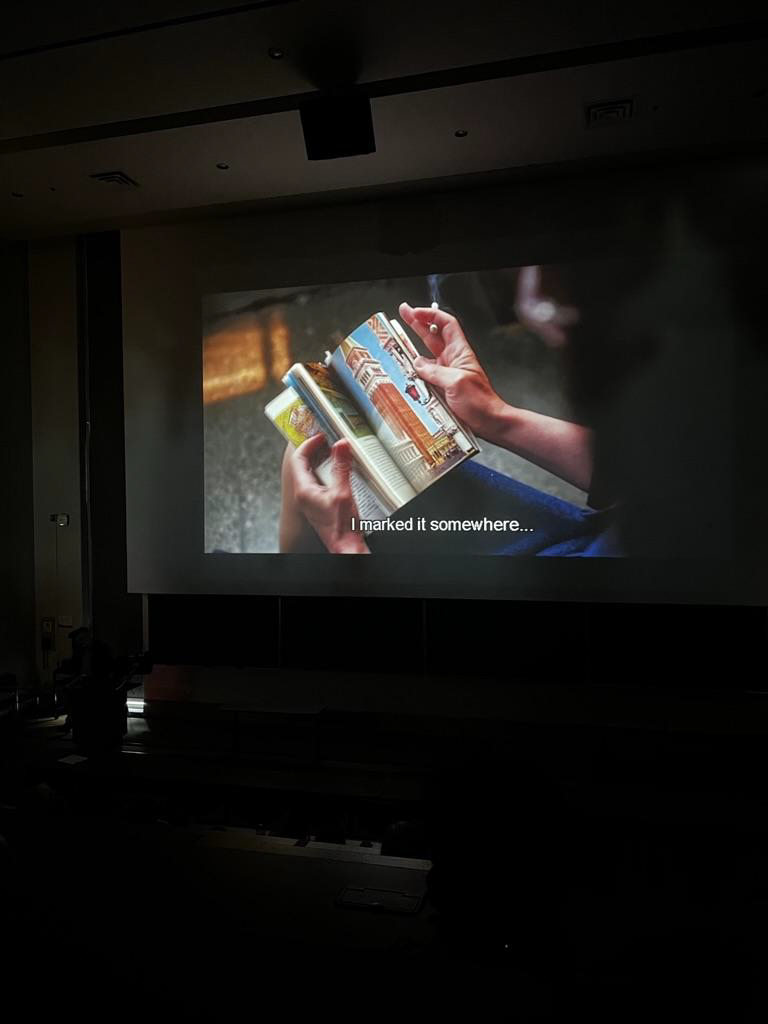
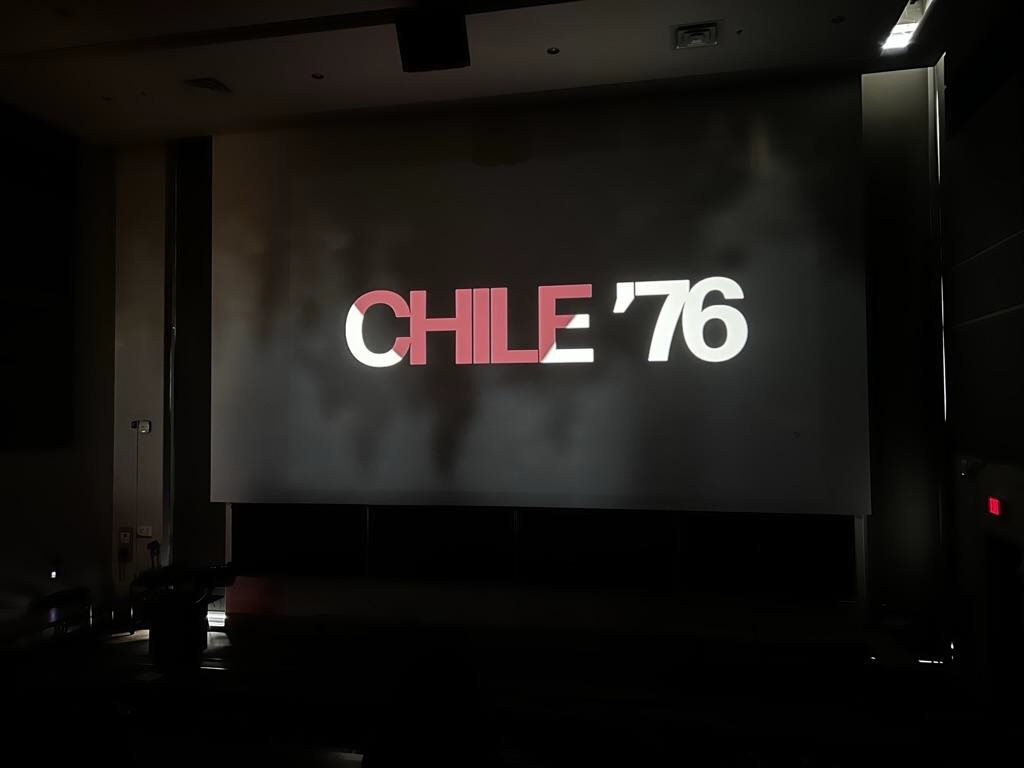
We watched the movie Chile ‘76[2] which takes place in 1976, one of the darkest years of dictatorship[3], was a time when the repression was being put into action in a more targeted way, with techniques of disappearance. The movie was very interesting, it’s a thriller and full of hidden messages and symbologies. I could understand some good phrases during the movie, I was trying to not read the subtitles when I could, only sometimes when the talking was faster or with more slang, it was harder for me to understand. Some interesting things I observed is that the main character Carmen always said “gracia” instead of “gracias”, also “te luego” instead of “hasta luego”. It’s nice to see this more “informal” way of speaking, that is maybe what is actually used in the day-to-day of Spanish speakers. Moreover, I also observed them saying a lot of “¿qué pasó?” and “¡cómo no!”. The second one I realized has the meaning of saying “of course” although it doesn’t literally translate to that, very interesting. I could also understand most part of the initial conversations using “¿cómo te llamas?”, “¿cómo estás?”, “mucho gusto”, etc.
After the movie during the discussion, a lot of people were sharing their insights about the movie and also the hidden signals and opinions about what we saw. The movie always shows the sea, and we commented how at that time the sea symbolized death because people used to be killed and thrown into the sea during those years. There’s also another scene where Carmen is making a cake, and she uses a red colorant while mixing the buttercream, symbolizing the blood that was in her hands in some way. An important detail to mention is that a lot of people who were there were kids and lived in Chile during that time, so they were actually sharing experiences from their lives. One lady shared something that anybody else realized, in the movie there’s a dog, and she said that the dog in Chile is a symbol of the poor protection, a symbol that was protecting them from the police, and from repression.
In conclusion, I can affirm that it was for sure an amazing event, being able to discuss the movie, understand the Spanish in it, and listen to people’s real-life experiences afterward was awesome. Everybody was very polite, and respectful, and I felt like I left there a different person. Wish I could do that again soon.
References:
https://events.ucalgary.ca/arts/political-science/event/444188-the-dictatorship-in-film
https://en.wikipedia.org/wiki/1976_(film)
https://en.wikipedia.org/wiki/Military_dictatorship_of_Chile”