
Spanish (page 21)
Beginners’ Spanish I (SPAN 201): Following a Food Recipe

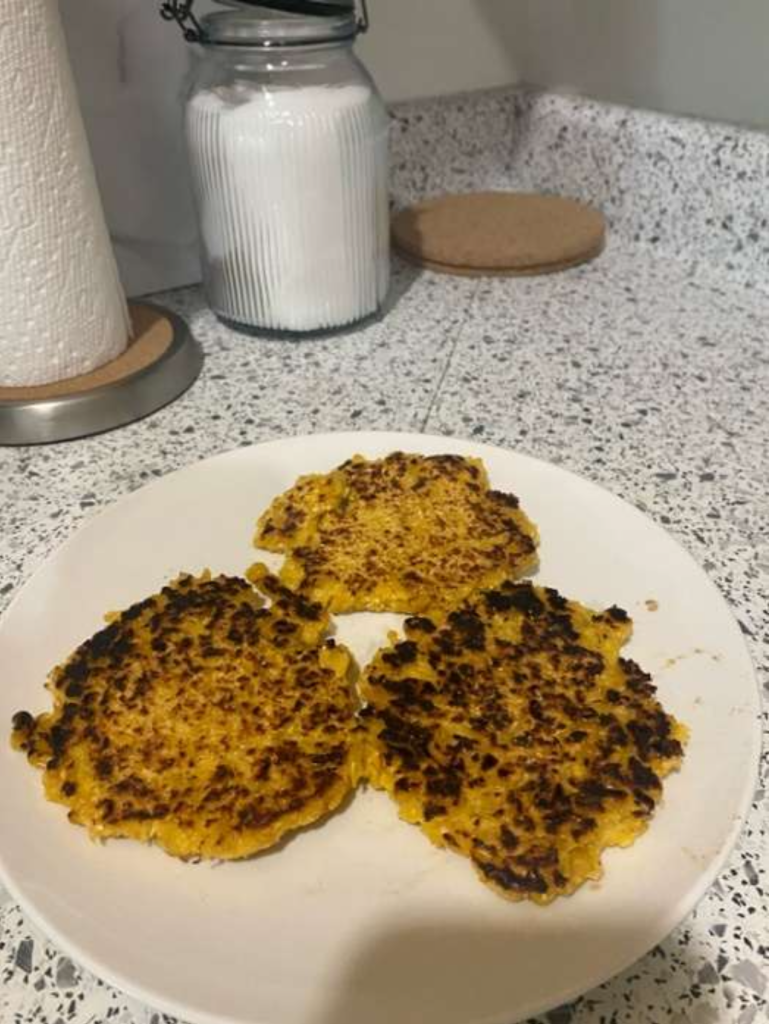
I decided that I would make Cachapas which are a traditional dish from Venezuela. It is a corn pancake that can be topped with queso de mano, carne mechada (Venezuelan shredded beef) or pernil de cochino (roasted pork leg). I decided to ask my Venezuelan friend for a recipe and she kindly gave me one in both Spanish and English.
Recipe in English:
Cachapas Ingredients
- 1 tin of cream corn
- 1 tin of whole corn
- Corn meal
Preparation
- Put the 2 tins in the blender
- Pour on a bowl
- Add the corn meal to the right thickness or consistency
- Cook in a pan with a little butter
Recipe in Español:
Cachapas Ingredientes
- 1 lata de maiz en crema
- 1 lata de maiz dulce entero
- Harina de maiz
Preparación
- Mezclar el maiz en la licuadora 1, 2, 3
- Verter en un cazo
- Agregar arina de maiz hasta lograr la consistencia adecuada
- Cocinar en una sarten con un poco de mantequilla
I found it interesting reading about the origins of the cachapa. The indigenous people that inhabited Venezuela and Colombia thought of corn as “a precious gift from a divine origin”. I also learned that cachapas are “from the same family” as the arepa as they both have pre-Columbian origins.
Something that helped me understand the Spanish words the most was the cognados. For example, “crema” sounds like cream. So, because of this I was able to know that the recipe called for cream corn since I know what maiz means. I also tried to use context clues, so even though I did not know that “1 lata” meant one cup I assumed it meant that. Some words that I found di icult to guess what they were was “sarten” (which I now know as pan) and “agregar (which I now know as add).
Some words in this recipe that I recognized was “maiz” (corn), adecuada (adequate), and “mezclar” (mix). One connection that I came across between the activity and the SPAN 201 class is that I saw real life examples of cognados which is what we learnt about in the second week of class. For example, “consistencia” sounds like consistency.
References
Tamale Traditions of Latin America | Torrance Memorial
Tamales: A Rich History | Cocina
Tamales and the Tamalada: a Christmas Tradition | Library of Congress Blogs